- Want to incorporate sleep as a perspective in research
- Have collected sleep data through questionnaires before, but feel that subjective data differs from reality
- Aggregating sleep data from questionnaires takes time, results are not quick
- Looking for more accurate and user-friendly wearable devices for sleep measurement.
In Current
Sleep Research Operations ,
Do you have
these challenges?

- Want to include objective sleep data as an evaluation item in research
- Want to request research support from academic KOLs.
- Want to use not only wearable devices, but also PSG-based EEG analysis and ePRO.
- Want to request one-stop support from research planning to ethics review, recruitment, measurement, and analysis.
Achieve high-precision sleep measurement
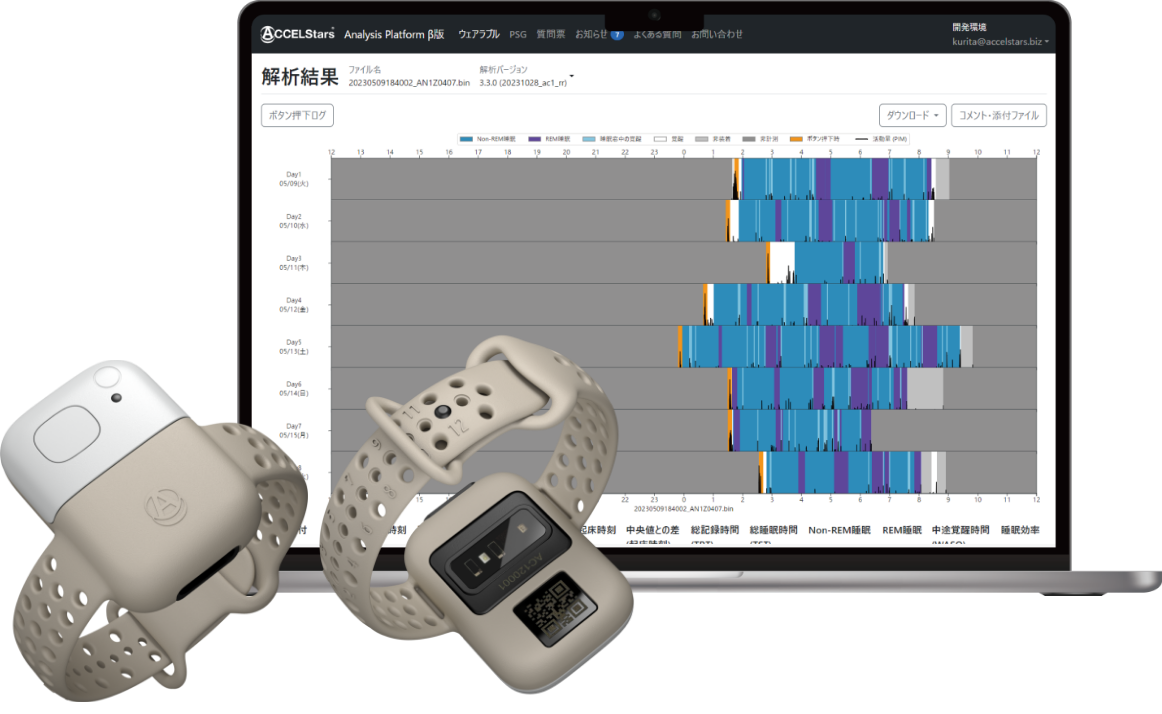
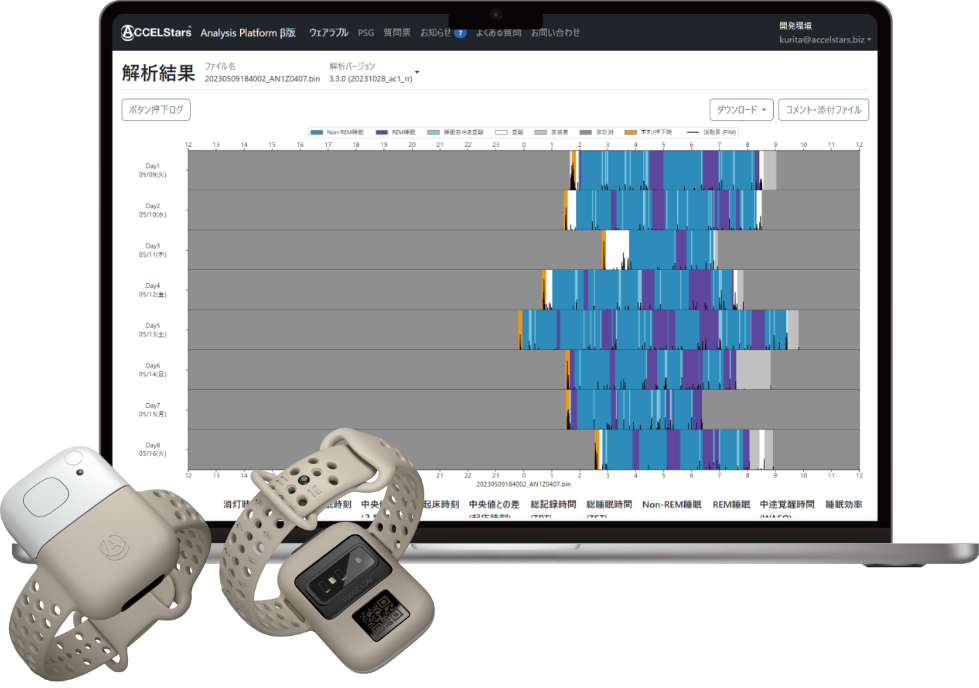
with wearable devices specialized for sleep and AI analysis cloud.


Service Features
Feature1
accurately detects awakenings during sleep.
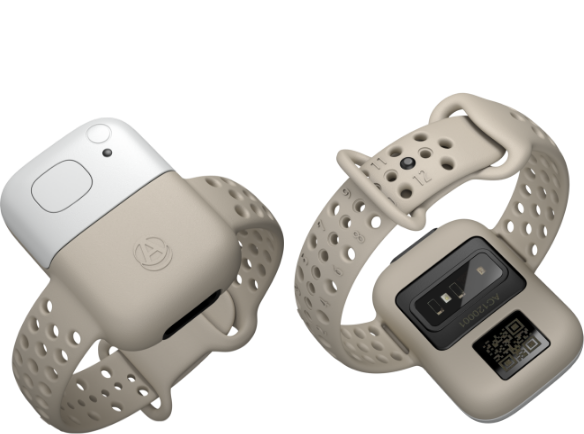
Accurate detection of awakenings during sleep is important in sleep evaluation. Our sleep device 'ACCEL POLARIS' is equipped with an accelerometer and PPG sensor, enabling accurate detection of awakenings. Battery lasts up to 2 weeks.
Feature2
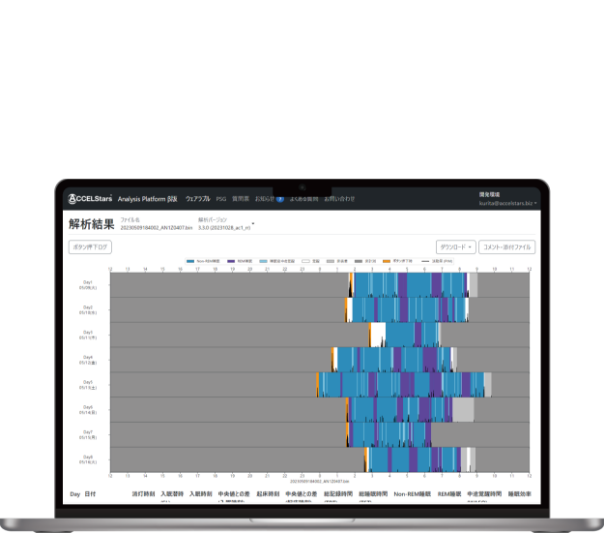
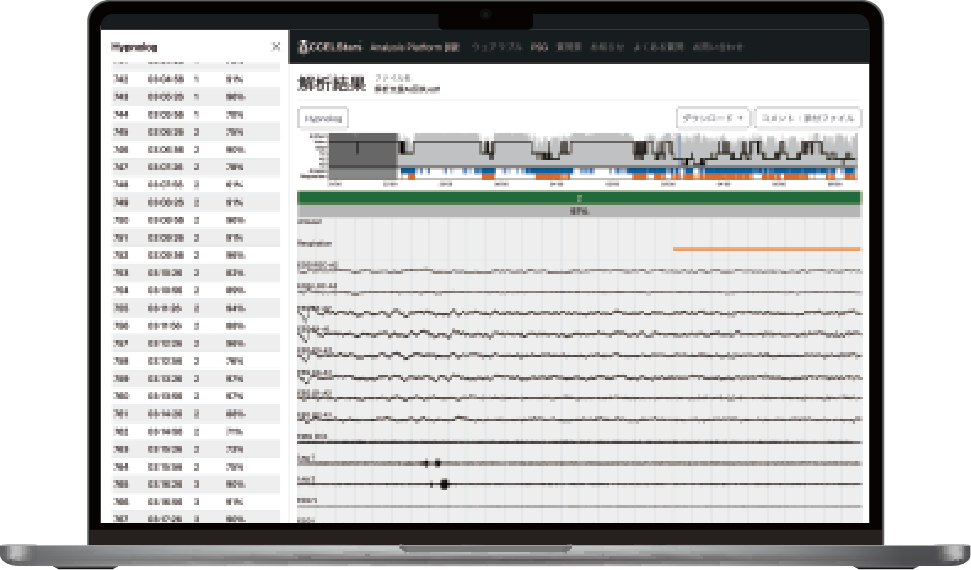
When data is uploaded to the analysis cloud, the algorithm automatically performs analysis. In addition to objective sleep indices, it also includes visual data and ePRO (electronic patient-reported outcome) functions, making it useful for sleep research and product evaluation.
- Binary Classification: Sleep/Wake.
- Three-State Classification: REM/Non-REM/Wake.
- Autonomic Nervous System Indices Based on Heart Rate and HRV.
- Displays Probabilities of Various Sleep Disorders by AI Assessment.
- Can Also Be Used to Improve Efficiency of Technologists.
- In addition to PSQI, AIS, 3DSS, and K6 questionnaires, you can freely create custom questionnaires.
- Can Be Used for Feedback to Participants.
Feature3
planning and collaboration with academia.
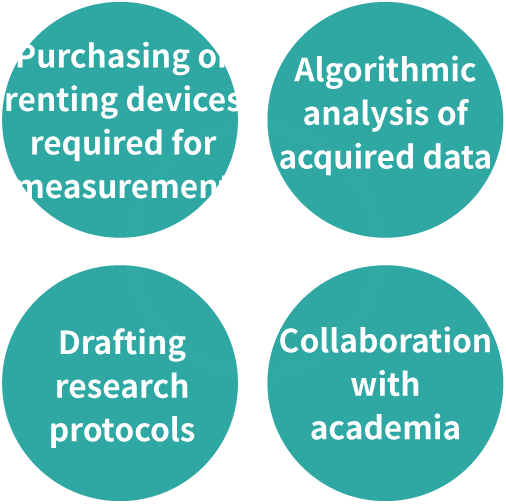
We support a wide range of needs related to sleep research—from purchasing or renting devices required for measurement, to algorithmic analysis of acquired data, and clinical research support such as drafting research protocols.
Feature4
Sleep/Wake Classification Algorithm.
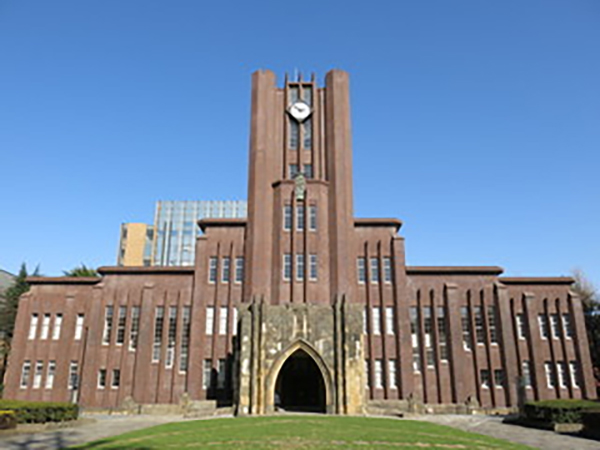
Founded by Professor Hiroki Ueda of the Graduate School of Medicine at the University of Tokyo. Our sleep analysis uses the high-precision 'ACCEL' algorithm developed by Ueda's research group (iScience, PNAS). By conducting daily sleep measurements in our lab and building training datasets, we continuously improve the AI's classification performance.
Evidence Development for
Sleep Research and Healthcare Products.
We conduct research and evidence development that contributes to diagnosis, prevention,
and drug discovery across a wide range of disease areas, particularly those in which sleep serves as a digital biomarker.
We also develop evidence for healthcare products and functional foods related to sleep, leveraging our devices and analysis cloud.
Universities and Medical Institutions.
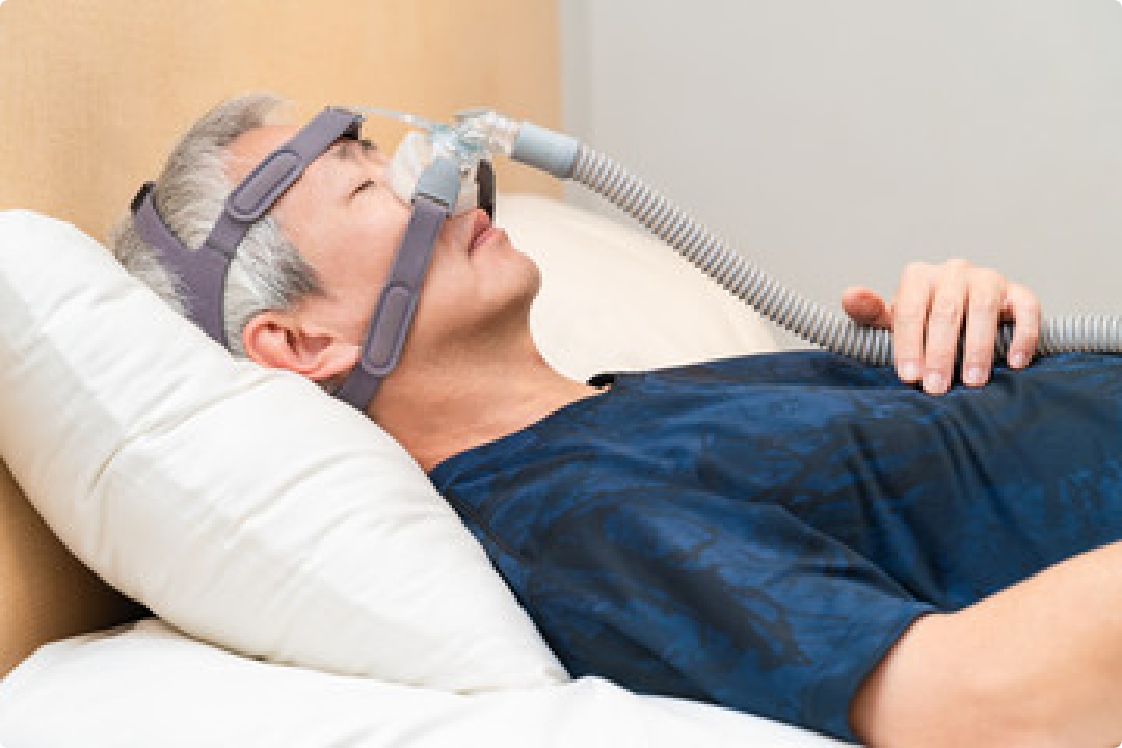
- Sleep Apnea Syndrome (SAS).
- Periodic Limb Movement Disorder (PLM).
- Central Hypersomnia Group
- Idiopathic Hypersomnia
- Insufficient Sleep Syndrome
- Narcolepsy Type 2
- Delayed Sleep-Wake Phase Disorder
- Sleep-Related Breathing Disorders
- Parkinson's Disease
- Alzheimer's Disease
- Childhood Epilepsy
- Cardiovascular Disease
- Ischemic Heart Disease
- Post-Stroke Rehabilitation.
- Sleep and Physical Activity in Pregnant Women.
- Pain and Sleep
- ...and more
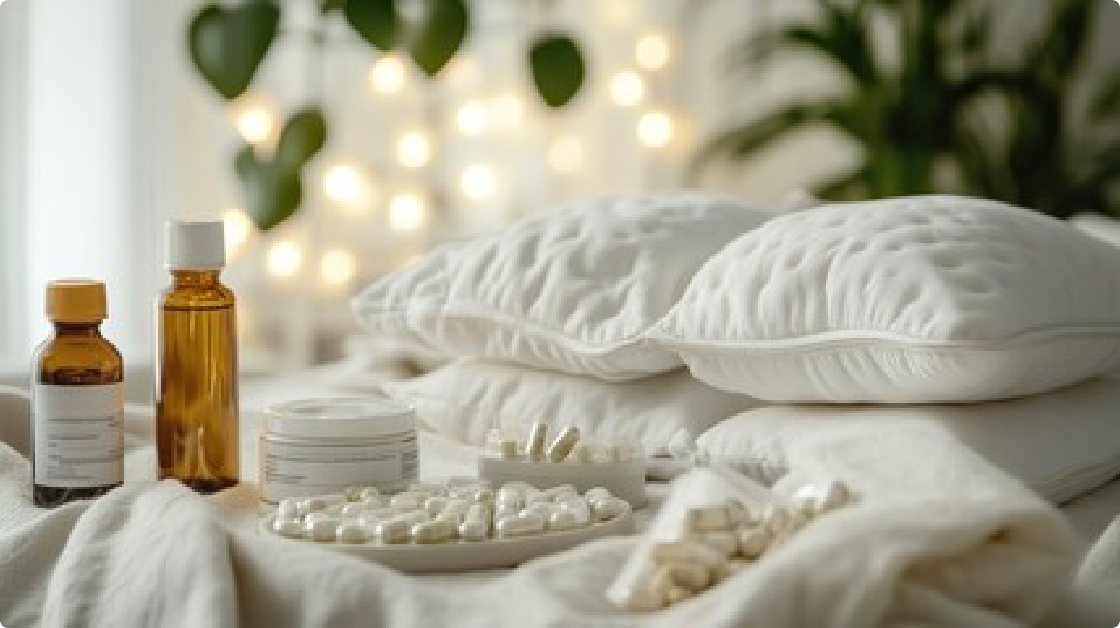
- Sleep Improvement Devices
- Sleep Improvement Goods
- Recovery Blanket
- Igusa (Rush Grass) Pillow
- Bedroom Environment
- Mattress
Research Support Achievements (Partial)
- Akita University
- Tohoku University
- Keio University
- Juntendo University
- The University of Tokyo
- Nagoya University
- Kyoto University
- Wakayama Medical University
- Tottori University
- Kyushu University
- Kurume University
- Fukuoka University
- University of the Ryukyus
- Inoue Hospital, Shunkai Medical Corporation.
- Kuwamizu Hospital, Howa Medical Corporation.
- Toranomon Hospital, Federation of National Public Service Personnel Mutual Aid Associations.
- Ota Sleep Science Center, Ota General Hospital Memorial Institute, Aijinkai Medical Corporation.
- National Institute of Mental Health, National Center of Neurology and Psychiatry.
- Japanese Red Cross Medical Center
- Kobayashi Pharmaceutical Co., Ltd.
- Saishunkan Pharmaceutical Co., Ltd.
- 3G Science LLC.
- KAPOK JAPAN Inc.
- Meiji Seika Pharma Co., Ltd.
- Morght Inc.
- 【FY2025】
- Simplified ML Models for Auto-Scoring Sleep Stages and Event-Based Detection of Arousals and Respiratory Events: Evaluation with Expert Consensus (Kurume University: Dr. Yagi │ SLEEP 2025)
- Accuracy Comparison of Sleep Stage Classification Between Healthy Individuals and SAS Patients Using Wearable Devices (Kurume University: Dr. Yagi │ 49th Annual Meeting of the Japanese Society of Sleep Research)
- Development of Automatic Models for Sleep Stage, Arousal, and Respiratory Event Detection Using High-Quality PSG Annotation Data (Kurume University: Dr. Yagi │ 49th Annual Meeting of the Japanese Society of Sleep Research)
- Validation of Arousal Detection by Deep Learning Models Using Wearable Devices (Kurume University: Dr. Yagi │ 49th Annual Meeting of the Japanese Society of Sleep Research)
- Impact of Circadian Rhythm Disorders on Cognitive Function in Patients with Mood Disorders (University of the Ryukyus: Dr. Shiroma │ 49th Annual Meeting of the Japanese Society of Sleep Research)
- Association Between Subjective and Objective Sleep Parameters in Mid-Pregnancy and Depressive Symptoms in Late Pregnancy: A Prospective Cohort Study (The University of Tokyo: Dr. Tanaka │ 49th Annual Meeting of the Japanese Society of Sleep Research)
- Association Between Sleep Regularity Index (SRI) and Physical Activity in Patients with Hypertension and Dyslipidemia (Nagoya University: Dr. Ito │ 49th Annual Meeting of the Japanese Society of Sleep Research)
- Correlation Between Objective Indices from Wristwatch-Type Device ACCEL POLARIS and 3D-Dimensional Sleep Scale (3DSS) Scores (Kurume University: Dr. Matsumoto │ 49th Annual Meeting of the Japanese Society of Sleep Research)
- Association Between Sleep Data, Heart Rate Variability from Wearable Devices, and Comprehensive Lifestyle Factors (University of the Ryukyus: Dr. Arakaki │ 49th Annual Meeting of the Japanese Society of Sleep Research)
- Association Between ALDH2 Polymorphism × Alcohol Consumption and Sleep Duration Measured with ACCEL (Saga University: Dr. Dokiya │ 49th Annual Meeting of the Japanese Society of Sleep Research)
- 【FY2024】
- Comparative Study of Sleep Between Medical Narcotics Users and Non-Users (Juntendo University: Dr. Keiko Yamada, Dr. Hiroko Ikemiya │ 53rd Annual Meeting of the Japanese Society of Neuropsychopharmacology)
- ALDH2 Genotyping for Sleep Hygiene: Association Between ACCEL-Measured Awakenings and Morning Urinary Dopamine (Saga University: Dr. Dokiya │ 45th Annual Meeting of the Japanese Society of Sleep Research)
- Comparison of Sleep and Fatigue in Shift Workers by Chronotype (Hamamatsu University School of Medicine: Dr. Kageyama │ Industrial Fatigue Research Group, 98th Regular Meeting of the Fatigue Research Society)
- Association Between Depression Severity and Autonomic Nervous System Activity During Sleep in Depressed Patients (Nagoya University: Dr. Niihara │ 48th Annual Meeting of the Japanese Society of Sleep Research)
- Study on Dietary Preferences and Sleep Quality in Patients with Ischemic Heart Disease (Nagoya University: Dr. Kurita │ 48th Annual Meeting of the Japanese Society of Sleep Research)
- Efforts to Improve Training Data Quality and Validation for REM Sleep Detection Using Wearable Devices (Kurume University: Dr. Yagi │ 48th Annual Meeting of the Japanese Society of Sleep Research)
- ALDH2 Genotyping for Sleep Hygiene: Association Between Total Sleep Time Measured with ACCEL and rs671 Variant (Saga University: Dr. Dokiya │ 48th Annual Meeting of the Japanese Society of Sleep Research)
- Kobe NEXT Study Report 1: Association Between Objective Sleep Indices Using Digital Tools and Questionnaire Items (Keio University: Dr. Okamura │ 83rd Annual Meeting of the Japanese Society of Public Health)
- Kobe NEXT Study Report 2: Examination of Sleep Efficiency and Health Indices Using Objective Sleep Parameters (Keio University: Dr. Okamura │ 83rd Annual Meeting of the Japanese Society of Public Health)
- Kobe NEXT Study Report 3: Association Between Subjective/Objective Sleep Parameters and Elevated NT-proBNP Levels in Community Residents (Keio University: Dr. Okamura │ 83rd Annual Meeting of the Japanese Society of Public Health)
- Association Between Objective Sleep Parameters and CKD in Community Residents (Keio University: Dr. Okamura │ 35th Annual Meeting of the Japanese Society of Epidemiology)
Implementation Process

Please contact us via the Request Materials or Contact buttons on this site.

We will confirm your requirements and explain the overview and fees. After the meeting, we will provide a quotation.

Please review the quotation.

Please submit the order request form.
